
Where smart software meets expert accounting.

Is there VAT on insurance in the UK? Understanding Insurance Premium Tax (IPT)

Is there VAT on insurance in the UK?
Picture of crunch software on mobile

Professional Bio Templates & Examples

Create a compelling professional narrative for a proper, attention-grabbing introduction.
Website bios
Speaker intros
Professional Profile

If you have ever taken out an insurance policy in the UK, you might have asked yourself: is there VAT on insurance? Many people assume the extra charge on top of a premium is VAT, but in most cases, that is not true. Insurance in the UK is generally exempt from VAT. Instead, a separate tax called Insurance Premium Tax, or IPT, applies to most insurance products.

Understanding this difference can help you see exactly what you are paying for and avoid confusion when reviewing your insurance policies.

In this article, we explain what VAT and IPT mean for insurance, the types of insurance affected, how IPT is calculated, and any exceptions that exist. By the end, you will know exactly how insurance is taxed in the UK.

Why insurance doesn’t have VAT

If you’ve found your way to this article, you’ve likely wondered, is there VAT on insurance? The answer is no. VAT (or Value Added Tax) applies to most goods and services in the UK at a standard rate of 20%. However, there are a few exceptions, and insurance is one of them.

Insurance is treated as a financial service in the UK, and as a general rule, financial services are exempt from VAT. Though there are exceptions. This means the premium you pay an insurance provider is not subject to VAT, even though it covers a service provided by the insurer. 

Please note though, that this doesn’t mean insurance is tax-free. Instead, most insurance premiums are subject to something called Insurance Premium Tax.

What is Insurance Premium Tax?

Insurance Premium Tax (or IPT) is a tax specifically applied to insurance premiums. It was introduced in 1994 to make sure insurance contributions carry a tax element. Similar to VAT, IPT is classed as a consumption tax. The difference however is that it only applies to insurance, and not all goods and services. 

Insurers collect IPT and pass it on to HMRC, which means the premium you pay usually already includes Insurance Premium Tax.

{{st-expense-guide}}

The two main rates of IPT

These rates of Insurance Premium Tax are set by the government and can change over time. The most recent increase was in 2017, when the standard rate went from 10% to 12%, see below for more information.

IPT rate Applies to
12% Standard rate for most general insurance policies
20% Higher rate for travel insurance and certain other insurance types

Which types of insurance are subject to IPT?

In truth, most policies are subject to IPT, it’s just the rate that will differ depending on type of insurance. 

Standard rate - 12%

Here are a few examples of where the standard rate applies:

  • Motor insurance.
  • Home insurance, including buildings and contents.
  • Commercial insurance, such as liability or property coverage for businesses.
  • Pet insurance.

Higher rate - 20%

In comparison, below are the types of insurances that attract the higher rate of IPT:

  • Travel insurance.
  • Insurance for events outside the UK, such as holiday cancellation.
  • Some extended warranty or gadget insurance policies.

Are any insurance policies exempt from Insurance Premium Tax?

Yes, although most insurance types attract IPT, there are a few that don’t. For example; life insurance, permanent health insurance, and certain reinsurance contracts.

How is Insurance Premium Tax calculated?

IPT is charged as a percentage of the premium. Unlike VAT, which businesses can sometimes reclaim, IPT cannot usually be reclaimed. It is just part of the total insurance cost.

Here is an example:

If you buy a home insurance policy with a premium of £500 and the standard IPT rate of 12% applies:

Premium before IPT: £500
IPT at 12%: £500 × 12% = £60
Total premium including IPT: £500 + £60 = £560

For travel insurance at 20% IPT:

Premium before IPT: £100
IPT at 20%: £100 × 20% = £120

Most insurance providers will either show IPT as a separate line or include it in the total premium. It is worth checking to avoid any surprises.

Why Insurance Premium Tax exists instead of just charging VAT

You might still ask: is there VAT on insurance? The law treats insurance as a financial service, so it is VAT-exempt. IPT was introduced to make sure insurance still contributes to tax revenue. Because IPT is targeted, it is only applied to insurance premiums where a consumption tax is appropriate, such as motor or travel insurance.

Special cases and exceptions

Some insurance policies are exempt from IPT:

  • Life insurance and permanent health insurance: Considered long-term financial products.
  • Certain reinsurance contracts: Insurance for insurers.
  • Excess-only or top-up policies: Some niche policies may have special tax treatment.

Always check with your insurance provider if you are unsure whether IPT applies.

How to check IPT on your insurance policy

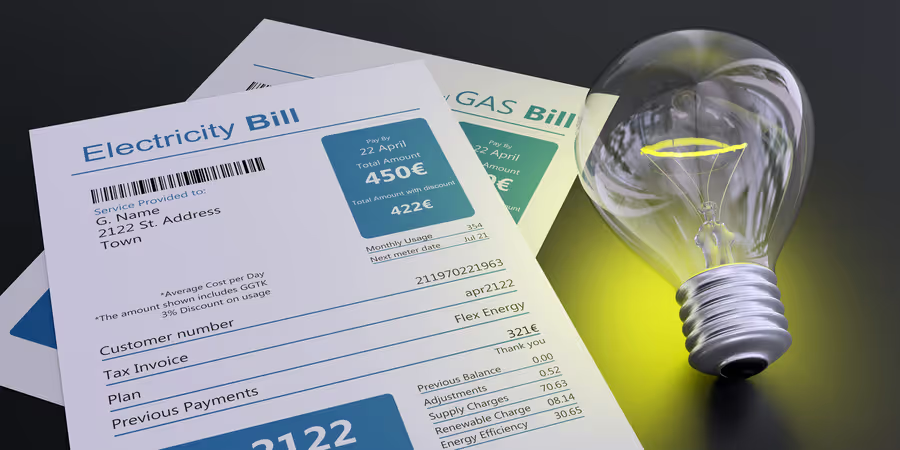
Most providers will show IPT clearly on your quote or invoice. Look for a line labelled Insurance Premium Tax or IPT, or check if it is included in the total premium.

For businesses, recording IPT separately in your accounts is a good idea, even if it cannot be reclaimed. This ensures you have a clear picture of insurance costs.

Comparing IPT with VAT

To give a clearer picture of how IPT compares with VAT across different products, the table below highlights the key differences:

Feature VAT IPT
Applies to Most goods and services Insurance premiums only
Standard rate 20% 12% (most insurance)
Higher rate 5% (reduced rate on some goods) 20% (travel and certain insurance)
Can businesses reclaim? Yes, if VAT-registered No
Included in price Often Usually shown separately or included

This shows why people often confuse IPT with VAT. The short answer is: insurance does not have VAT, but it does have IPT.

{{crunch-free}}

How does IPT affect Limited Companies and Sole Traders?

For business policies, such as professional indemnity, public liability, or company vehicle insurance, IPT is included in the premium. Unlike VAT, it cannot be reclaimed, so it should be accounted for as part of your total business costs. Keeping track of IPT separately in your accounts can help you understand your actual expenses and avoid surprises at renewal time.

Here is a table showing the main types of insurance, the IPT rate that applies, and whether VAT is charged or can be reclaimed:

Policy type IPT rate VAT applicable Can business reclaim?
Motor insurance (personal or company) 12% No No
Home or commercial buildings insurance 12% No No
Travel insurance 20% No No
Life insurance 0% No No
Professional indemnity (Limited Company) 12% No No

IPT and claims

IPT only applies to the premium itself, not to claims payments. For example, if you make a motor insurance claim, the payout to repair your car will not include IPT. This is different from some other taxes and means you are only taxed on coverage, not on compensation.

What this means

Once you know the answer to the question “Is there VAT on insurance?” it becomes much easier to understand what you’re actually paying for. Insurance premiums are exempt from VAT, with Insurance Premium Tax (IPT) often applied instead.

For businesses, it’s just one of many small details that can affect costs and cash flow. At Crunch, we help Sole Traders and Limited Companies keep track of expenses like insurance properly. Whether you want to do-it-yourself with our free software, or whether you want it all done-for-you with expert accountants in your corner, we’ve got you covered.

Speak to an accounting expert

If you're unsure what level of support you need, our friendly team are on hand to help you pick the right package for you.
Self Assessment tax returns done for you, for just £200+VAT
Take the stress out of Sole Trader Accounting, with our simple online software, so you can look after your accounts anytime, anywhere.
Share this post
Vicki Nichols
Marketing communications & content manager
Updated on
January 19, 2026

Knowledge Hubs

Take control of your accounts, today

Crunch’s effective software package includes being able to talk to an expert client manager and a Chartered Certified Accountant. You can count on Crunch to make you productive and profitable.

Save your seat! Live e-commerce webinar

Register and soak in the wisdom from top industry leader! June 27, 2024 1:30 PM
Dive into e-commerce basics
Expert industry insights
Practical tips and savvy tricks
Pro Tip
Self employed and worried about getting a mortgage?

Download our Self-employed mortgage guide full of insider tips give you the edge to secure the mortgage you deserve.

Pro Tip
Your first payroll in the UK made simple.

A beginner friendly guide for small business owners running payroll for the very first time. Clear instructions to set it up with confidence.

Pro Tip
Want to keep more of what you earn?

A clear guide to deductible Sole Trader expenses and how claiming them can put more money back in your pocket.

Pro Tip
Your accounts? sorted. Your sanity? intact.

Our free software does the maths, you do the magic.

Pro Tip
Forecast your cash flow

Plan ahead and stay on top of your finances with our free cash flow forecast template, helping you track income, expenses, and plan for what’s next.

Pro Tip
Mortgages for the self-employed, made simple

Being your own boss shouldn’t make getting a mortgage harder. We offer better rates, flexible options, and expert support designed just for the self-employed.

Pro Tip
Wondering how the Autumn Budget affects your bottom line?

Download our guide for expert insights from an accountant, tailored for business owners and the self-employed.

Pro Tip
Work out the tax you owe in seconds

Discover your true take-home pay with our self-employed tax calculator – see exactly what you’ll keep after tax, National Insurance, and expenses.

Pro Tip
Want to know how much National Insurance you owe?

Find out exactly what you owe on your income in seconds with our free National Insurance calculator.

Pro Tip
Want to know how much mileage you can claim for?

Our free mileage allowance calculator can help you see in seconds what you could get back.

Pro Tip
Want to work out your income tax?

Find out what Income Tax and National Insurance you owe on your earnings with our free tax calculator.

Pro Tip
Want to work out what your Capital Gains Tax bill?

Our free Capital Gains Tax calculator shows what tax you owe on any property, stocks or gifts.

Pro Tip
Want to know how much dividend tax you owe?

Find out exactly what you owe on your investments in seconds with our free dividend tax calculator.

Pro Tip
Want to see what we're currently working on?

Our public roadmap shows what we're working on and what's coming next. You can even vote on what features we work on next!

Pro Tip
Your shortcut to stress-free taxes

From Self Assessment to claimable expenses and bookkeeping, this guide cuts through the confusion and saves you time (and sanity).

Pro Tip
Unlock your ecommerce potential

Download our free guide to discover how accounting can simplify global selling, make VAT easier, and stop stock issues eating into your profits.

Pro Tip
Unlock the secrets of Ltd company expenses

Don't miss out on potential tax savings - get access to our 'Limited Company Expense' guide today!

Pro Tip
Want to make sure you don't miss any tips?

Sign up to our newsletter for expert insights, tax news and other essential updates that will keep your business thriving. Subscribe now!

Pro Tip
Ready to save big on Ecommerce accounting?

Crush your current accounting and software fees by up to 60%. Put us to the test and watch your savings soar!

Pro Tip
Looking for a dedicated accountant?

Our Crunch Premier packages offer tailored support for you and your business. You can focus on your business, we'll crunch the numbers.

Pro Tip
Accounting sorted. As easy as pie.

Get your Limited Company accounts sorted without the headache – simple, supportive, and stress-free.

Pro Tip
Accounting sorted. As easy as pie.

MTD ITSA looming? We’ll handle the hard bits, so you can focus on running your business, not wrestling with tax rules.

Pro Tip
Still not done your Self Assessment? ⏱️

Get it filed guaranteed by the deadline with our Express Filing Service for an extra £110+VAT.

Pro Tip
Using cloud-based accountancy software to manage your finances gives any small business a big advantage!

At Crunch we provide affordable cutting-edge, easy-to-use software with real human support from expert chartered accountants. That’s probably why 81% of our clients would recommend Crunch.

Pro Tip
Want access to real expert accountants?

All our accounting packages include free access to Chartered Certified Accountants, so you can make confident business decisions without worrying about extra costs racking up.

Pro Tip
Still not done your Self Assessment? ⏱️

Get it filed guaranteed by the deadline with our Express Filing Service for an extra £110+VAT.

Pro Tip
Did you know - We have a free plan that is great for sole traders and limited companies?

Why not see for yourself? It’s simple and easy to use and 100% free.